
Related items loading ...
Section 1: Publication
Publication Type
Journal Article
Authorship
Feigl, M., Roesky, B., Herrnegger, M., Schulz, K. and Hayashi, M.
Title
Learning from mistakes - Assessing the performance and uncertainty in process-based models
Year
2022
Publication Outlet
Hydrological Processes, 36, e14515
DOI
ISBN
ISSN
Citation
Feigl, M., Roesky, B., Herrnegger, M., Schulz, K. and Hayashi, M. 2022. Learning from mistakes - Assessing the performance and uncertainty in process-based models. Hydrological Processes, 36, e14515,
https://doi.org/10.1002/hyp.14515 .
Abstract
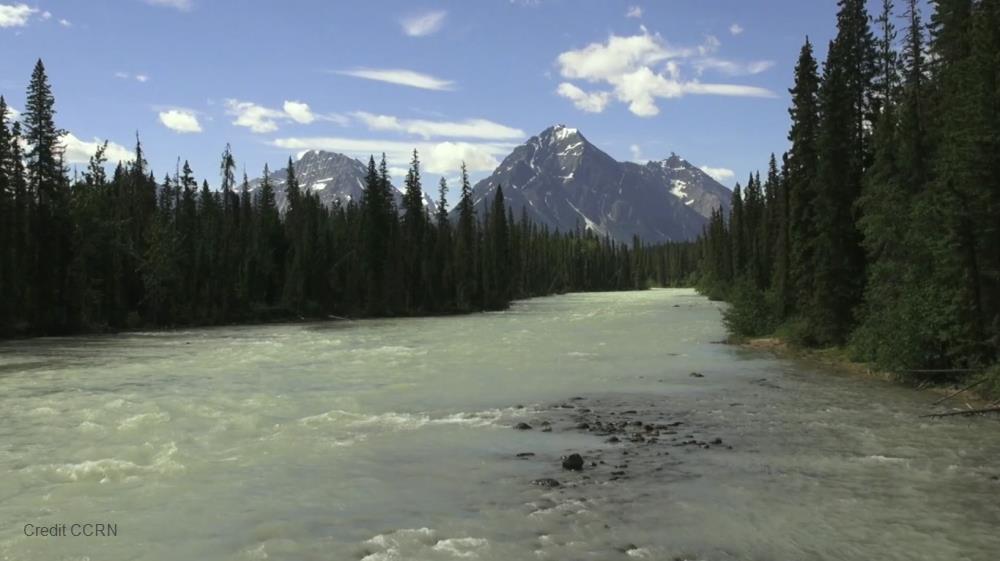
Typical applications of process- or physically-based models aim to gain a better process understanding or provide the basis for a decision-making process. To adequately represent the physical system, models should include all essential processes. However, model errors can still occur. Other than large systematic observation errors, simplified, misrepresented, inadequately parametrised or missing processes are potential sources of errors. This study presents a set of methods and a proposed workflow for analysing errors of process-based models as a basis for relating them to process representations. The evaluated approach consists of three steps: (1) training a machine-learning (ML) error model using the input data of the process-based model and other available variables, (2) estimation of local explanations (i.e., contributions of each variable to an individual prediction) for each predicted model error using SHapley Additive exPlanations (SHAP) in combination with principal component analysis, (3) clustering of SHAP values of all predicted errors to derive groups with similar error generation characteristics. By analysing these groups of different error-variable association, hypotheses on error generation and corresponding processes can be formulated. That can ultimately lead to improvements in process understanding and prediction. The approach is applied to a process-based stream water temperature model HFLUX in a case study for modelling an alpine stream in the Canadian Rocky Mountains. By using available meteorological and hydrological variables as inputs, the applied ML model is able to predict model residuals. Clustering of SHAP values results in three distinct error groups that are mainly related to shading and vegetation-emitted long wave radiation. Model errors are rarely random and often contain valuable information. Assessing model error associations is ultimately a way of enhancing trust in implemented processes and of providing information on potential areas of improvement to the model.
Plain Language Summary
Section 2: Additional Information
Program Affiliations
Project Affiliations
Submitters
Publication Stage
Published
Theme
Presentation Format
Additional Information
Mountain Water Futures , Refereed Publications
 Metadata Editor
 Record List
 Alias List Editor
 Legacy sites


 GWFNet
 Master
 Research
 Map
Map
 Advanced
 Tools
Tools
 . . .
. . .