
Related items loading ...
Section 1: Project Information
Project Name
Led by
|
|
Lead 1
|
Lead 2
|
Lead 3
|
Lead 4
|
|
Name
|
|
|
|
|
|
Institution
|
|
|
|
|
|
Role
|
|
|
|
|
|
Contact Information
|
|
|
|
|
Classification (e.g., "GWF Pillar 3", "CCRN", etc.)
CRHO
Project Websites
Project Description
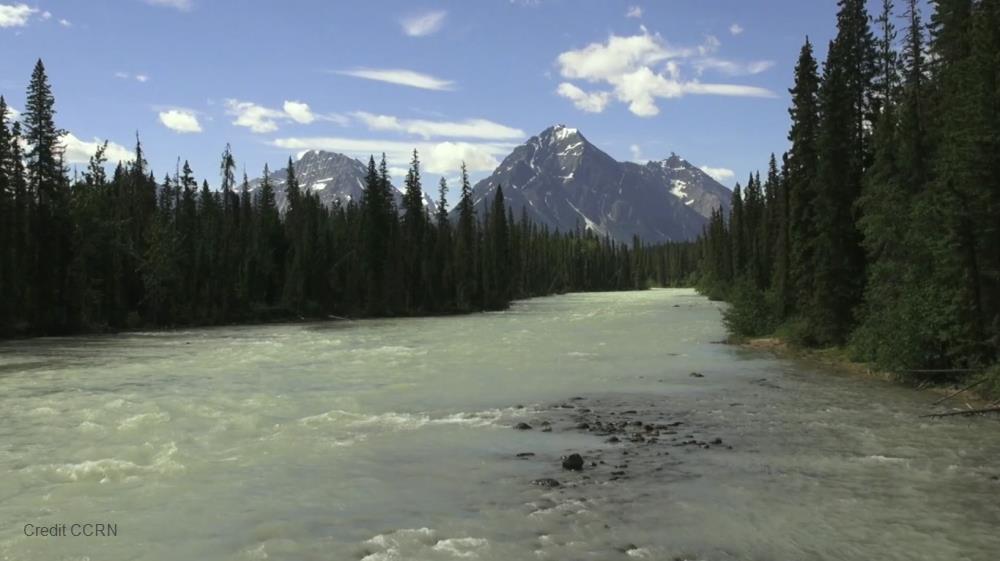
The Canadian Rockies Hydrological Observatory is a major observational network run by the Centre for Hydrology, USask in collaboration with the Biogeosciences Institute, University of Calgary, the University of Waterloo, the National Hydrological Service of Environment and Climate Change Canada, Government of Alberta and other partner organizations to improve understanding and prediction of hydrometeorological, ecological and cryospheric phenomena in the Canadian Rocky Mountains. It forms part of the Global Cryosphere Watch programme of the World Meteorological Organisation, Geneva and is staged from the Barrier Lake Research Station of the University of Calgary’s Biogeosciences Institute in Kananaskis.
It aims to:
- Advance development and integration of information on how hydrological, ecohydrological and cryospheric processes interact to form streamflow
- Develop and run hydrological models to produce earth system and water resource predictions for past and future climates.
Principal Research Questions
1. How do mountain basin biophysical characteristics affect snow and ice systems to produce hydrological responses to precipitation and energy inputs on time scales from hours to centuries?
2. Do cold regions mountain hydrological systems enhance or dampen the effects of climate variability on water resources?
3. Are the Canadian Rocky Mountains a reliable future source of streamflow?
Principal Objectives
1. Improve understanding and description of governing processes for mountain water supply
- Snow and glacier cold regions processes
- Ecohydrological processes
- Sub-surface processes
2. Improve modelling of mountain hydrological systems
- Fine-scale distributed physically based simulations
- Mesoscale headwater catchment models
- Large-scale river basin and continental models
3. Use better observations and modelling to improve predictions of mountain water supply
- Downscale current meteorology and future climate to drive cold regions hydrology in the light of concurrent ecohydrological dynamics
- Predict hydrological cycling and quantify uncertainty in these calculations in ungauged mountain basins
- Improve the coupling of the sub-surface flow system to the surface / atmosphere system
Project Participants
|
John Pomeroy | | University of Saskatchewan |
Cherie Westbrook | | University of Saskatchewan |
Warren Helgason | | University of Saskatchewan |
Richard Petrone | | University of Waterloo |
Masaki Hayashi | | University of Calgary |
Alain Pietroniro | | University of Calgary |
Tricia Stadnyk | | University of Calgary |
Bruce Davison | | Environment and Climate Change Canada |
Julie Thériault | | Université du Québec à Montréal |
Ronald Stewart | | University of Manitoba |
Stephen Déry | | University of Northern British Columbia |
Joni Onclin | Support Staff | |
Kieran Lehan | Technician | |
Lindsey Langs | Technician | |
Logan Fang | Research Scientist | |
Current Status of this Project
 Metadata Editor
 Record List
 Alias List Editor
 Legacy sites


 GWFNet
 Master
 Research
 Map
Map
 Advanced
 Tools
Tools
 . . .
. . .