
Related items loading ...
Section 1: Publication
Publication Type
Thesis
Authorship
Montocchio, D. S.
Title
Evaluating ecological responses of Georgian Bay (Lake Huron) coastal wetlands to two decades of atypical water levels
Year
2024
Publication Outlet
McMaster University, MacSphere, Open Access Dissertations and Theses Community, Open Access Dissertations and Theses
DOI
ISBN
ISSN
Citation
Montocchio, D. S. (2024) Evaluating ecological responses of Georgian Bay (Lake Huron) coastal wetlands to two decades of atypical water levels, McMaster University, MacSphere, Open Access Dissertations and Theses Community, Open Access Dissertations and Theses,
https://hdl.handle.net/11375/31058
Abstract
Georgian Bay (GB) coastal wetlands are unique in their geomorphology and quality. Though not pollution impaired, these wetlands are currently threatened by regional climate change, and its influence on their water level (WL) regime. Recently, GB coastal wetlands experienced 14-years of prolonged low WLs, followed by an eight-year increase in WLs, which was a departure from the eight-year oscillations modelled from 1865-2007. To conserve these ecosystems, it is critical to understand how these wetlands responded to these atypical WL patterns. First, we compared scores from three wetland health indicators between periods of low and high WLs. We determined that abiotic indicators became falsely inflated during high waters, through the dilution of concentration-dependent parameters. We also established that biotic indicators were unaffected by changing WLs, but masked significant changes in plant and fish communities. During initial low WLs, emergent and rosette basal macrophytes, and certain fish species (blackchin, blacknose, and common shiner, bluntnose minnow, longnose gar, rock bass, and smallmouth bass) that showed a preference for shallow, low-density vegetation dominated. During high WLs, unrooted submergents and canopy macrophyte species, along with fish species (bluegill, bowfin, largemouth bass, and northern sunfish), which were positively associated with dense and deep vegetation, dominated coastal wetlands. Based on these results, I developed 14 macrophyte and 10 fish Indicator Species of low and high WLs. Using independent data, all Indicator Species were supported, although only one macrophyte and two fish species were statistically confirmed. Since the fyke nets I used throughout the two decades of WL fluctuations could not be deployed effectively, due to the development of dead tree zones (DTZs), I developed a camera array, which was not depth or substrate dependent. This research advances our understanding of coastal wetlands’ responses to changes in WLs, and highlights tools to use in similar conditions.
Plain Language Summary
Section 2: Additional Information
Program Affiliations
Project Affiliations
Submitters
Publication Stage
Published
Theme
Presentation Format
Additional Information
Boreal Water Futures; Ohneganos
 Metadata Editor
 Record List
 Alias List Editor
 Legacy sites
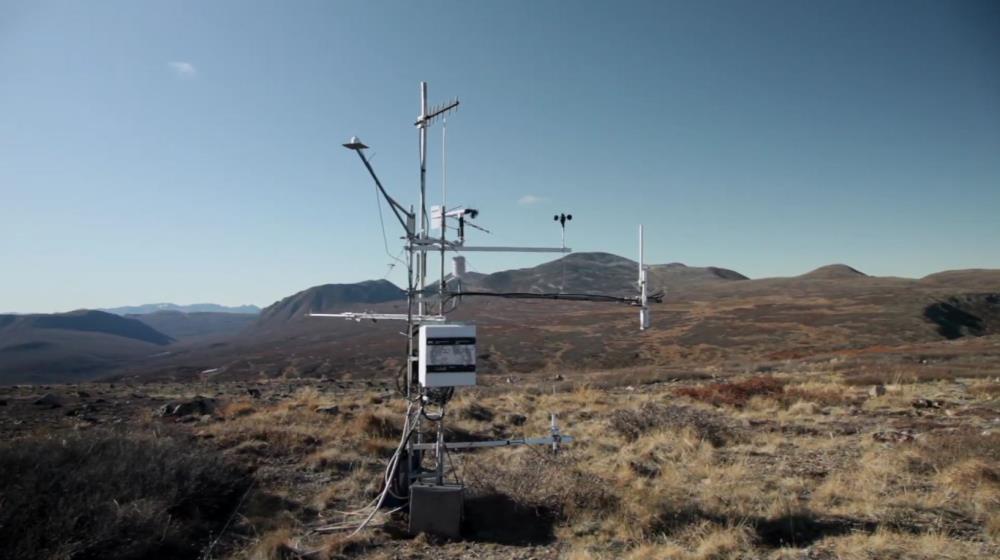


 GWFNet
 Master
 Research
 Map
Map
 Advanced
 Tools
Tools
 . . .
. . .